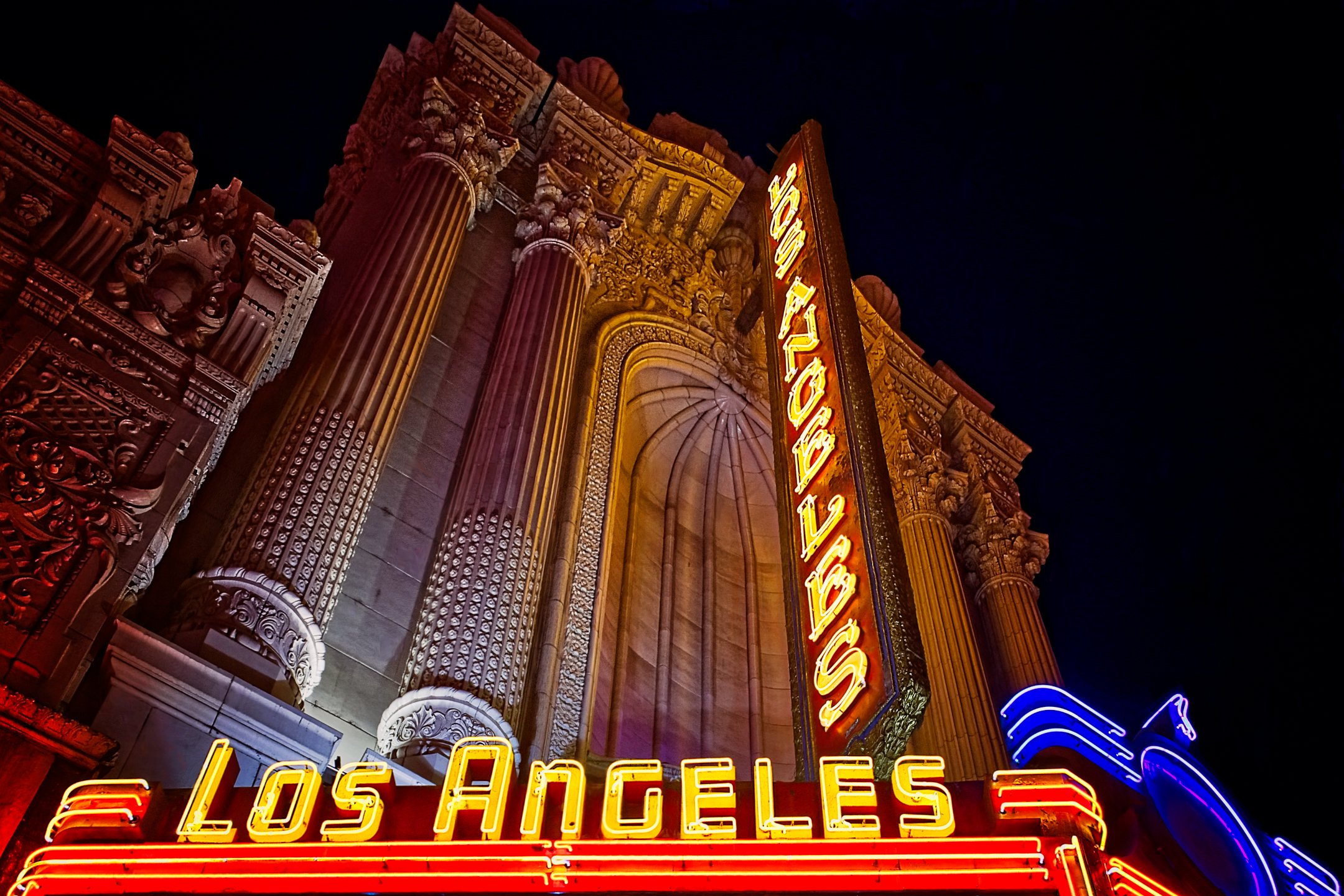
The Los Angeles Theatre-1931
Architect: S. Charles Lee and Samuel Tilden Norton
Style: Renaissance Revival
Completed in 1931, the Los Angeles Theatre was built during a period of great transition in both Los Angeles and the motion-picture industry. Rising from South Broadway Street in terra-cotta, light, and shadow, it was conceived not merely as a movie house but as a place where art, architecture, and technology were carefully intertwined.
Independently operated by theatre owner H. L. Gumbiner and designed by the renowned theatre architect S. Charles Lee, the Los Angeles Theatre embodied the belief that cinema deserved dignity and ceremony. From the towering façade to the carefully proportioned interior, every element was designed to guide visitors gently from the street into a shared experience. Spacious seating, softly illuminated aisles, and a bowl-shaped auditorium floor were intended to minimize distractions and discomfort, allowing audiences to settle fully into the act of watching.
On January 30th, 1931, the theatre opened with the world premiere of Charlie Chaplin’s City Lights, a silent film released during Hollywood’s transition to sound. Both the film and the building suggested that progress need not abandon beauty or restraint, and that innovation could serve artistry rather than overwhelm it.
What made the Los Angeles Theatre especially distinctive, however, was its many innovations to enhance the theatre audience's comfort and convenience. In local newspaper ads leading up to the opening, the Los Angeles Theatre was described as "Theatre Unusual." Beneath the auditorium, in the basement lounge, the theatre reportedly housed one of its most unusual features: a small screen that reproduced, in real time, the film playing upstairs. Designed by Francis G. Pease, an astronomer and optical instrument designer, the system diverted a portion of light from the main projector and transmitted it more than a hundred feet through a concealed tube, allowing patrons in the lounge to see and hear the film while stepping away from their seats.
The idea behind this innovation was simple. In the early 1930s, moviegoing was a social ritual, and smoking was a common part of it. Rather than forcing patrons to choose between comfort and attention, the theatre accommodated both. Visitors could pause, move, and socialize without being excluded from the film’s shared experience.
Whether this system worked perfectly or how long it remained in operation is uncertain. No known photographs document it in use, and much of what we know comes from contemporary newspaper accounts. One such article describes Albert Einstein, pipe in hand, sitting beside Charlie Chaplin in the lounge and watching this “bent light” at work. Whether literal or aspirational, the image captures the spirit of the place: a theatre where science, art, and everyday life briefly met.
Today, the Los Angeles Theatre is much more than a surviving movie palace from an earlier era. It represents a moment when theatres were designed with extraordinary care, and theatre architecture responded not only to spectacle but also to comfort, movement, and wonder.